4-Section Daily Pages | A Journaling Alternative
5 ways for visual artists to approach Morning Pages to enhance creativity and solve problems + 2 book recommendations.

– 3 min read
5 ways for visual artists to approach Morning Pages to enhance creativity and solve problems + 2 book recommendations.
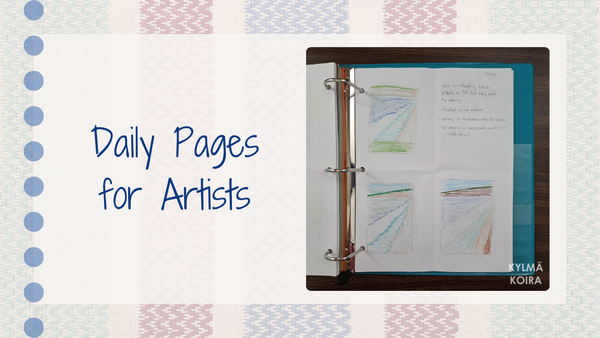
My engineering education served me well when I was doing knitting pattern design. It helped me create an efficient design process that I used again and again. Now that I'm taking a more artistic approach with my weaving, I need to think about my work and solve problems in different ways, so I started reading "The Artist's Way" by Julia Cameron for guidance.
One activity I liked from the book (even though it doesn't quite fit in with the way I work) is establishing a writing ritual known as Morning Pages. Essentially, it's just writing three pages of your stream-of-consciousness thoughts every morning to help spark your creativity. However, right now I have plenty of ideas for weaving projects flowing. What I need is a way to visually express those ideas, hopefully in more than one way, so I don't forget them and can untangle some problems before I head to the loom.
Rather than writing Morning Pages, I'm developing my own daily page practice that's about 1/4 writing and 3/4 sketching. I start with a single piece of paper and fold it into quarters. I use the first section to jot down thoughts for the day. Then I sketch out those thoughts in the other three sections. Like Morning Pages, I'm not seeking perfection or planning out every detail. It's all about letting the ideas flow. There's no need for fuss or judgement (or too much erasing).
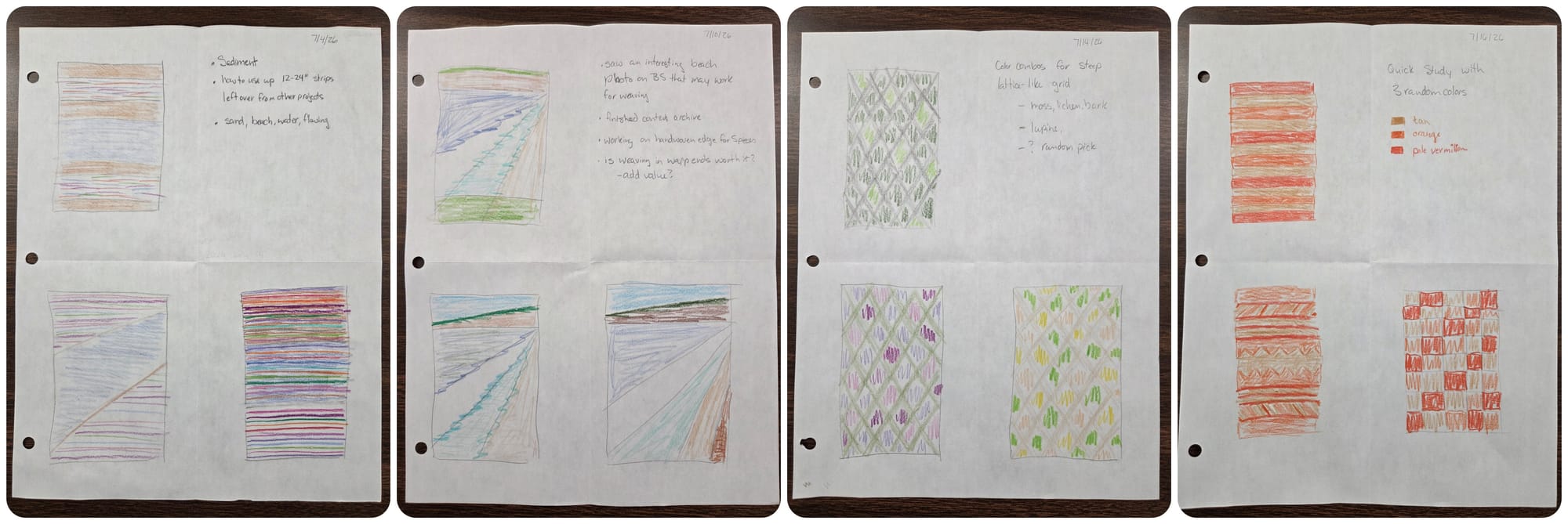
Here are four ideas to help you get started with a 4-Section Daily Page:
I'm putting my daily pages into a notebook. Whenever I'm ready to head to the loom, I'll flip through to see which idea I'd like to study and develop into a handwoven design.
Another book I am currently reading is "Essentialism: The Disciplined Pursuit of Less" by Greg McKeown. One of the chapters is about removing obstacles from your path.
An Essentialist produces more—brings forth more—by removing more instead of doing more.
I used my 4-section page process to help remove obstacles related to three items that have been lingering on my to-do list for too long. Again, as I do my page, I'm not seeking perfection. I just want to identify what's been holding me back and brainstorm possible solutions.
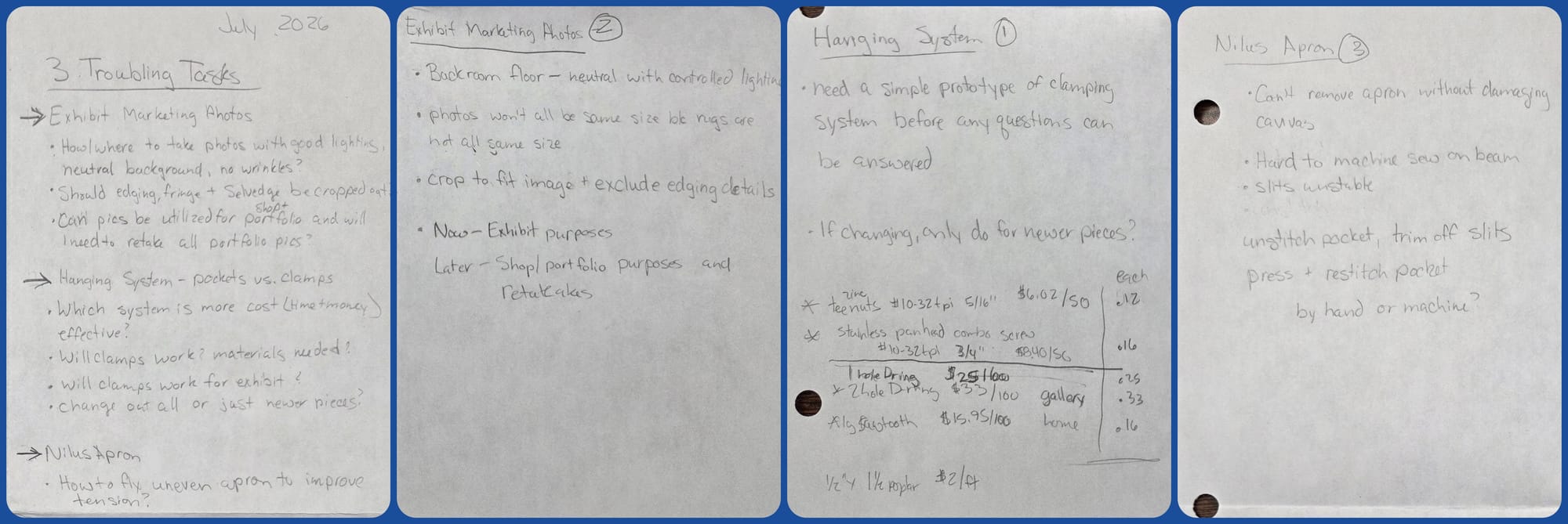
I was actually surprised by how much more prepared I felt to tackle each task after just completing the first section of my page. Putting into words why each task was bothering me made me quickly realize that some of my concerns were not even worth my time. As I write this message, it has been less than 24 hours since I made my page. One of my troubling tasks is completely done, I will know how to proceed with another after a trip to the hardware store, and I have a plan for how to complete the third this weekend.