Loom Restoration | Part 1

– 3 min read
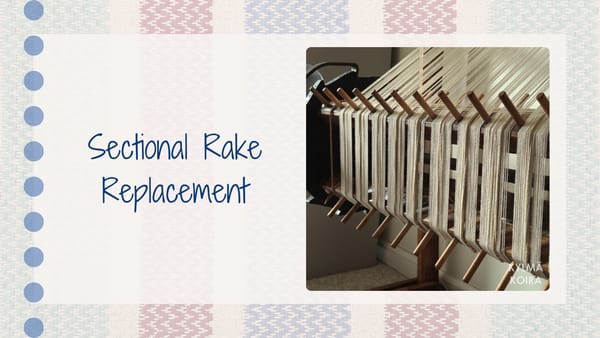
When I inherited Grandpa's rug loom, I was eager to get it cleaned up so I could carry on our family's rug weaving tradition. In so many ways I was picking up where Grandpa left off. I felt (and still feel) a responsibility to respect his weaving practice as I develop my own.
One challenge I've faced since I tied my first warp onto Grandpa's loom is maintaining an even warp tension. At first I thought the issue was related to something I was or wasn't doing properly as I wove. The threads at the center of each warp would get tighter and tighter as those at the edges became loose and floppy.
One afternoon I had an epiphany as I sat in my thinking chair and glanced over at the loom as it neared the end of a warp. The four rakes that keep the threads separated on the warp beam were significantly bowed, likely from being tightly wrapped with warp threads and stored in a damp basement for 35+ years. Even though replacing the rakes would improve my handwoven products, I was hesitant to make changes to the loom. The thought of removing pieces Grandpa built and replacing them with my own felt like a betrayal until I realized the loom is quite literally where our skills and heritage intertwine.
Now, I consider myself pretty handy, but I don't have any fancy woodworking tools or skills. Before starting the restoration I had to trust that when Grandpa built the loom for me (although he never knew it) he would make it so I could easily construct replacement parts when they wore out.
I removed the four bent rakes and when I set them side by side it was easy to see why the center threads were always tight. The diameter at the center of the four rakes is smaller than the diameter at the ends.
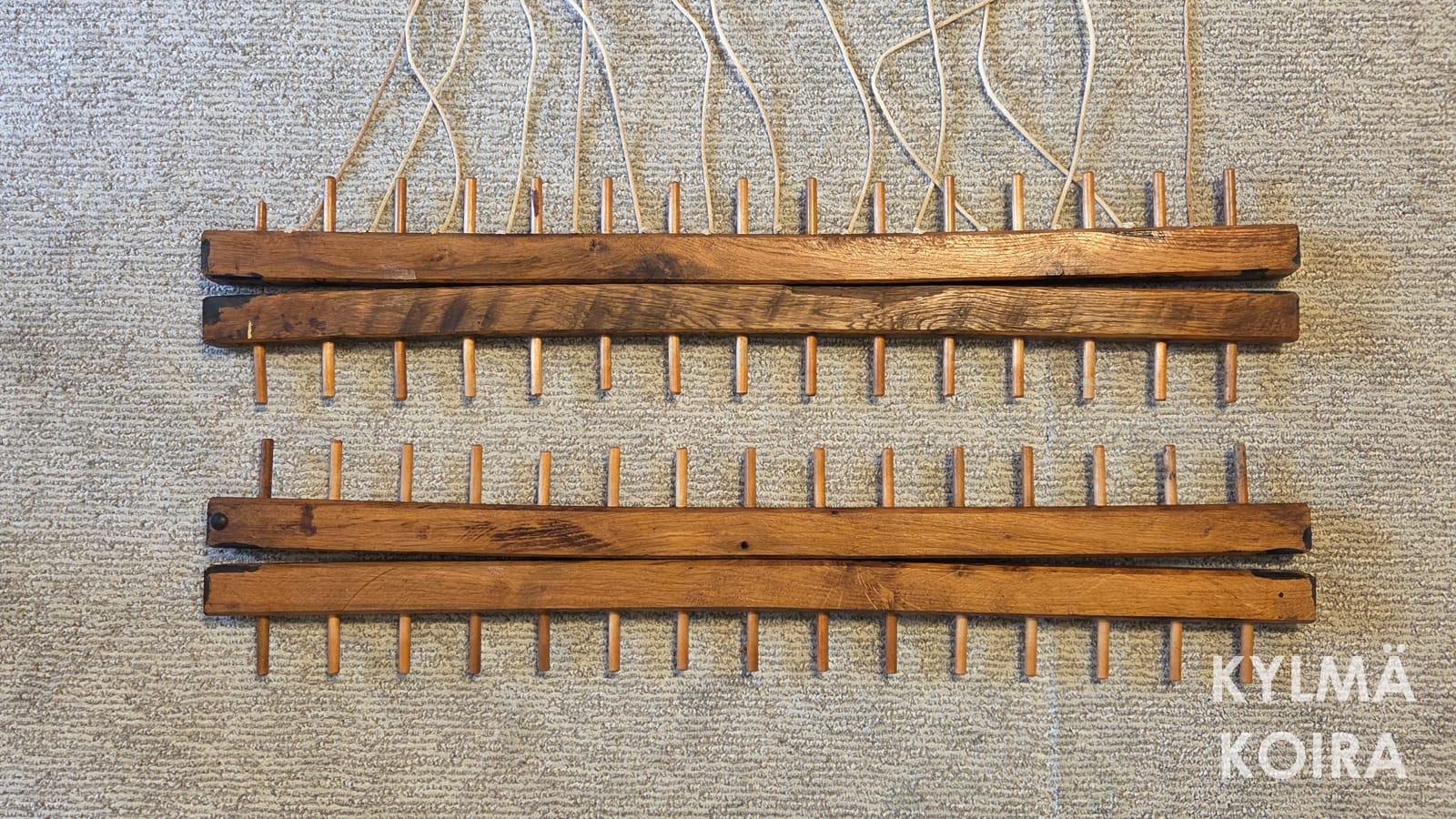
Besides being bent, something else has always bothered me about the rakes. The rakes have 14 sections but at the front of the loom there are only 12 warp ties. That's not ideal, but it's something I could correct after taking measurements, making a plan and getting materials.
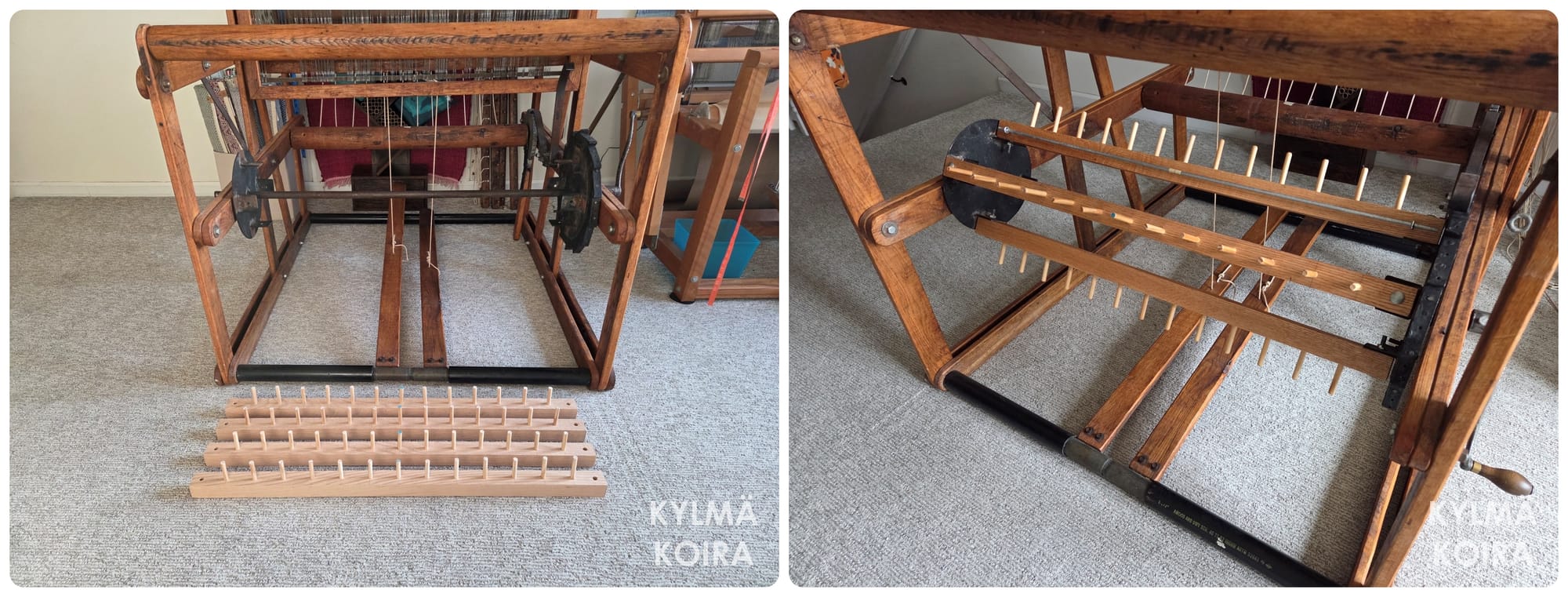
Armed with a pencil, ruler, handsaw, electric drill, sandpaper and wood glue, I was able to construct four new, 12-section rakes in an afternoon. The next day I finished them with Danish oil. A few days later I installed the rakes on the loom and considered my next step.
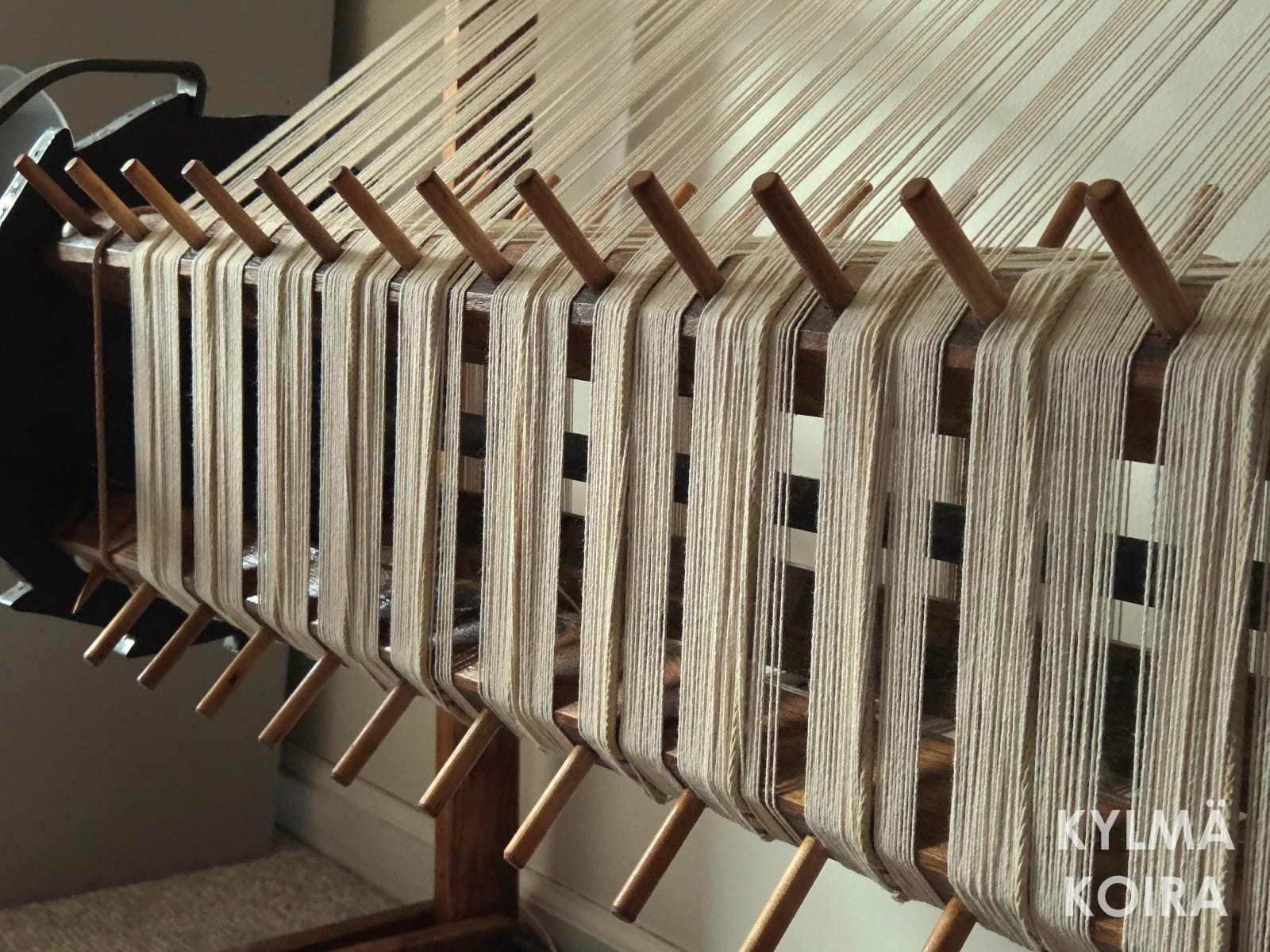
Grandpa had stapled heavy ropes to his rakes as warp ties. Although it is a simple solution, the thickness and placement of the ropes interferes with the consistent measurement of the warp threads (see photo 1). To improve upon his original design, I attached a steel rod to the side of one rake and tied on thin, heavy cotton warp ties.
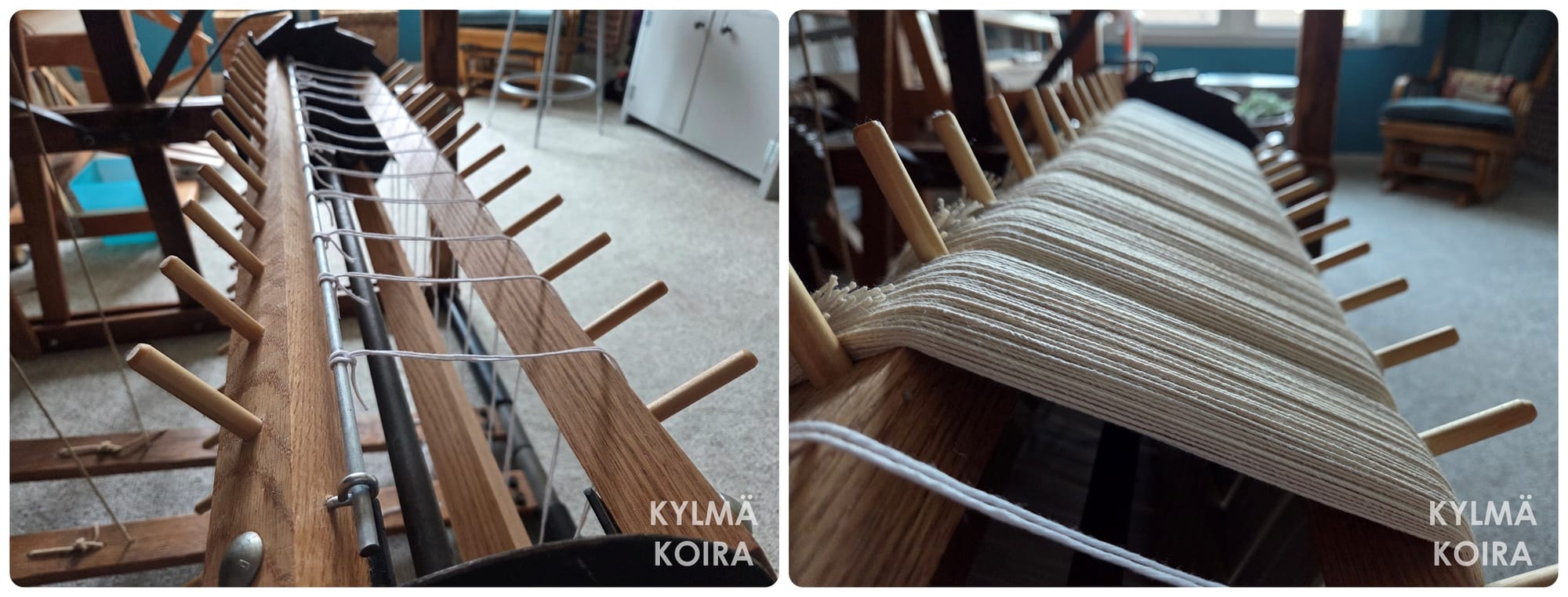
I'm pretty sure Grandpa was smiling over my shoulder as I wound a fresh warp onto his loom. Just look at those neatly packed warp bundles! I'm almost ready to start my next weaving project.